
Regulation exists to protect the financial system.
Without proper regulatory compliance, crypto platforms face:
- Legal sanctions
- Bank account restrictions
- Transaction shutdowns
- Loss of business trust
For users and merchants, choosing a compliant crypto platform in Indonesia reduces long-term risk.
From Regulation to Implementation: How Compliance is Built
Compliance is not added later.
It is designed from the start.
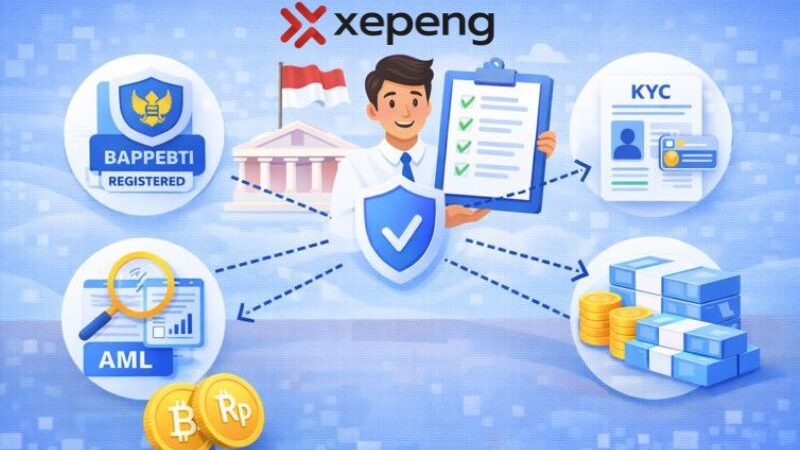
A compliant crypto platform builds compliance through:
- Legal registration
- Identity verification
- Transaction monitoring
- Rupiah settlement
- Banking oversight
Each layer supports crypto compliance in Indonesia.
Legal Registration As The First Compliance Requirement
The foundation of crypto platform compliance Indonesia is legal registration.
A compliant platform must:
- Be registered with BAPPEBTI
- Operate under Indonesian commodity regulation
- Clearly disclose its legal status
Platforms without BAPPEBTI registration cannot operate legally.
For legal context, see Is Crypto Legal in Indonesia
Kyc As A Core Crypto Compliance Process
Know Your Customer (KYC) is mandatory for crypto platforms.
Platforms ensure regulatory compliance by:
- Verifying user identity
- Collecting required documentation
- Preventing anonymous misuse
KYC is essential for crypto business compliance in Indonesia.
Aml And Transaction Monitoring Systems
Anti-Money Laundering controls ensure ongoing compliance.
Platforms apply AML compliance by:
- Monitoring transaction behavior
- Detecting suspicious patterns
- Flagging high-risk activity
This protects users, platforms, and banking partners.
RUPIAH SETTLEMENT AS A LEGAL COMPLIANCE MECHANISM
Crypto is not legal tender in Indonesia. Rupiah must remain the final settlement.
Compliant platforms ensure this by:
- Converting crypto to IDR
- Settling transactions via Indonesian banks
- Preventing direct crypto-denominated payments
This rule is central to crypto payment compliance Indonesia.
Bank Partnerships As External Compliance Validation
Banks act as external compliance gatekeepers.
Only compliant crypto platforms can:
- Open settlement accounts
- Process IDR payouts
- Maintain operational continuity
Bank cooperation confirms regulatory compliance.
How Platforms Maintain Compliance Over Time
Regulations evolve. Compliance must adapt.
Platforms maintain ongoing regulatory compliance through:
- Dedicated compliance teams
- Internal audits
- Policy updates
- Regulatory reporting
Compliance is continuous, not one-time approval.
Compliance Checklist For Users And Businesses
Before using a crypto platform, check:
- Is the platform BAPPEBTI registered?
- Does it apply KYC and AML?
- Are transactions monitored?
- Is settlement done in Rupiah?
- Does it work with Indonesian banks?
This checklist helps identify a legal crypto platform in Indonesia.
Key Takeaways On How Platforms Ensure Regulatory Compliance
- Regulatory compliance is system-based
- BAPPEBTI registration is mandatory
- KYC and AML are core requirements
- Rupiah settlement is required by law
- Banks reinforce compliance standards
Platforms that follow these steps operate legally and sustainably.
Faq: Regulatory Compliance For Crypto Platforms
How do platforms ensure regulatory compliance in Indonesia?
By registering with BAPPEBTI, applying KYC and AML, monitoring transactions, and settling in Rupiah.
Is regulatory compliance required for crypto payment platforms?
Yes. Crypto payment platforms must meet the same compliance standards.
Why is Rupiah settlement mandatory for compliance?
Because crypto is not legal tender in Indonesia.
Do banks require crypto platforms to be compliant?
Yes. Banks only work with compliant platforms.Is compliance optional for crypto platforms?
No. Without compliance, platforms cannot operate legally.