
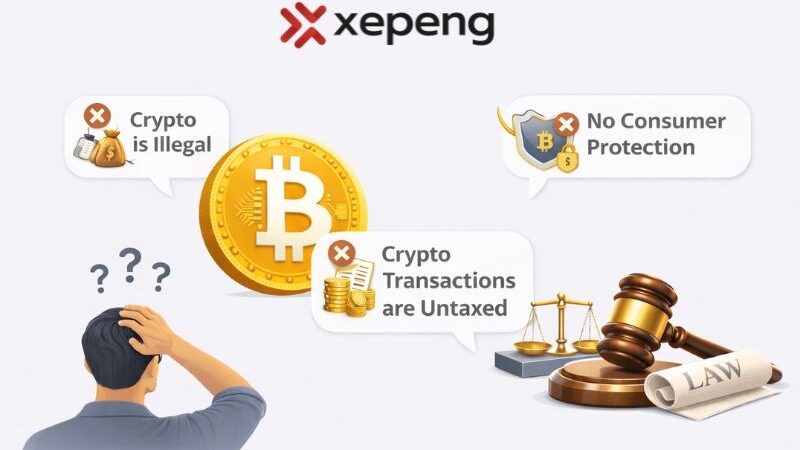
Crypto adoption in Indonesia continues to grow.
However, legal understanding often does not.
Many users, merchants, and visitors still misunderstand how crypto law in Indonesia actually works. This article addresses the most common myths about crypto legality in Indonesia and explains the reality in a clear and practical way.
Myth 1: Crypto Is Illegal in Indonesia
This is the most common misconception.
Reality
Crypto is legal in Indonesia when treated as a digital asset. It is regulated, not banned.
What is allowed:
- Owning cryptocurrency
- Trading crypto as an asset
- Managing crypto for investment purposes
What is not allowed:
- Using crypto as legal tender
Indonesia allows crypto to exist under an asset-based regulatory framework.
Myth 2: Crypto Can Be Used Directly to Pay Merchants
Many people assume that legality means crypto can be used freely for payments.
Reality
Cryptocurrency is not legal tender in Indonesia. Goods and services must be settled in Rupiah (IDR).
Legal crypto payment structure in Indonesia:
- Crypto is converted through a compliant platform
- Settlement occurs in Rupiah
- Merchants receive IDR
In this structure, crypto functions as an asset conversion mechanism, not as money.
Myth 3: All Crypto Platforms Are Legal in Indonesia
Not all crypto platforms operate under Indonesian regulation.
Reality
A legal crypto platform in Indonesia must:
- Follow local regulatory requirements
- Apply KYC and AML controls
- Settle transactions in Rupiah
- Work with Indonesian banking partners
Choosing a non-compliant platform significantly increases legal and operational risk.
Myth 4: Indonesian Banks Reject All Crypto Activity
This myth often discourages businesses from exploring crypto-related solutions.
Reality
Banks do not reject crypto itself.
Banks reject non-compliance.
Indonesian banks support crypto-related activity when platforms:
- Are transparent
- Follow regulatory rules
- Manage risk responsibly
Platforms that fail compliance often lose banking access.
Myth 5: Tourists Can Pay Merchants Directly With Crypto in Indonesia
This misunderstanding is common in tourist destinations.
Reality
Tourists cannot pay merchants directly with crypto in Indonesia.
What is allowed:
- Crypto-to-Rupiah conversion
- Licensed and compliant intermediaries
- Rupiah settlement for merchants
This structure protects merchants, tourists, and the national payment system.
Myth 6: Using Crypto Is Always Legally Risky in Indonesia
Crypto is often perceived as inherently risky.
Reality
Legal risk depends on how crypto is structured and used.
Crypto is legal and safe when:
- Treated as a digital asset
- Converted properly into Rupiah
- Settled in IDR
- Processed through compliant platforms
Most legal risks stem from misinformation not from crypto itself.
Key Takeaways: Crypto Law in Indonesia
- Crypto is legal in Indonesia as a digital asset
- Crypto is not legal tender
- All payments must settle in Rupiah
- Platform compliance matters
- Most risks come from misunderstanding the rules
Understanding these principles removes much of the confusion around crypto law.
FAQ: Crypto Law Myths in Indonesia
Is crypto legal in Indonesia?
Yes. Crypto is legal as a regulated digital asset, not as currency.
Can merchants accept crypto directly in Indonesia?
No. Payments must be converted and settled in Rupiah.
Are all crypto platforms legal in Indonesia?
No. Only platforms that comply with Indonesian regulations are legal.Do Indonesian banks support crypto transactions?
Yes—when compliance requirements are met.