
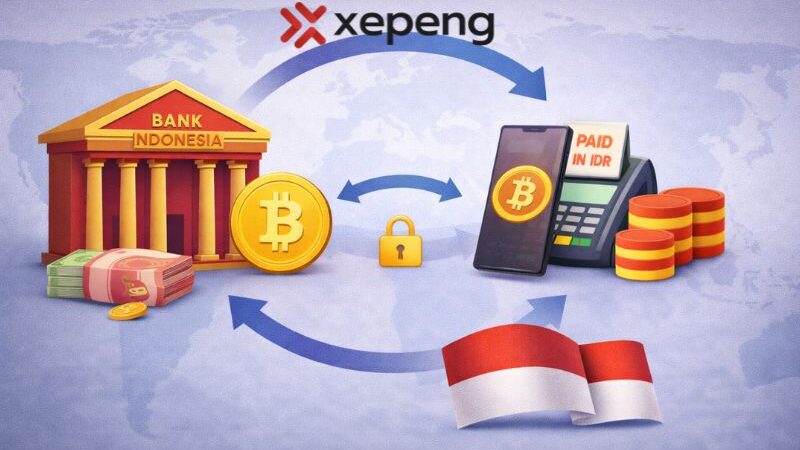
As cryptocurrency adoption grows, many users and businesses ask the same questions: how do Indonesian banks and crypto interact? Can banks accept cryptocurrency? How does crypto to IDR Indonesia conversion work? And what role do banks play in crypto payment Indonesia?
This article explains the relationship between Indonesian banks and crypto within Indonesia’s current banking and payment regulations.
Can Indonesian Banks Hold or Accept Crypto?
Indonesian banks are not allowed to hold, trade, or accept cryptocurrency directly.
This is because:
- Cryptocurrency is not legal tender in Indonesia
- Banks are required to operate strictly in Indonesian Rupiah (IDR)
- Crypto is classified as a digital asset, not a currency
As a result, Indonesian banks do not provide crypto wallets, crypto accounts, or crypto-denominated payment services.
The Role of Indonesian Banks in Crypto Transactions
Although banks do not interact with crypto directly, they still play a crucial role in crypto to rupiah conversion and settlement.
Banks are involved in:
- IDR settlement after crypto conversion
- Merchant fund disbursement
- Fiat on-ramp and off-ramp processes
This indirect role allows crypto transactions to remain compliant while staying fully within Indonesia’s regulated banking system.
How Crypto to IDR Indonesia Conversion Works With Banks
A compliant crypto to IDR Indonesia transaction flow typically follows this structure:
- A customer pays using cryptocurrency
- The crypto is converted through a regulated platform
- An Indonesian bank receives and settles the funds in IDR
- The merchant receives rupiah directly into their bank account
This model ensures that banks only handle IDR, while crypto is used solely as a value-transfer mechanism.
Crypto Payments and Bank Indonesia Regulations
Under Bank Indonesia payment regulations:
- All payments must be settled in IDR
- Product pricing cannot be denominated in cryptocurrency
- Crypto payments must follow a conversion-based settlement model
This framework enables legal crypto payment Indonesia services without disrupting Indonesia’s national payment system or banking stability.
Crypto Payments in Bali: A Practical Use Case
In regions such as Bali, crypto adoption is largely driven by international visitors.
With compliant crypto Bali payment solutions:
- Customers pay using cryptocurrency
- Conversion occurs instantly through regulated systems
- Merchants receive IDR via local Indonesian banks
This structure makes crypto to IDR Bali services attractive to global customers while remaining fully compliant with Indonesian regulations.
Why Secure Crypto Payment Platforms Matter for Banks
Banks can only participate in crypto-related transactions indirectly, through secure crypto payment platforms.
These platforms:
- Handle crypto conversion and settlement
- Ensure compliance with OJK and Bank Indonesia regulations
- Connect crypto transactions to Indonesian banking infrastructure
Without regulated and secure crypto payment platforms, banks would not be able to support crypto-related transaction flows.
Conclusion: How Banks and Crypto Coexist in Indonesia
Indonesian banks and crypto do not interact directly, but they are connected through regulated conversion and IDR settlement systems.
Through compliant crypto to rupiah conversion and secure platforms, banks ensure that crypto usage fits safely within Indonesia’s financial framework.For users and businesses, understanding this relationship is essential for using crypto payment Indonesia solutions legally, securely, and sustainably.