
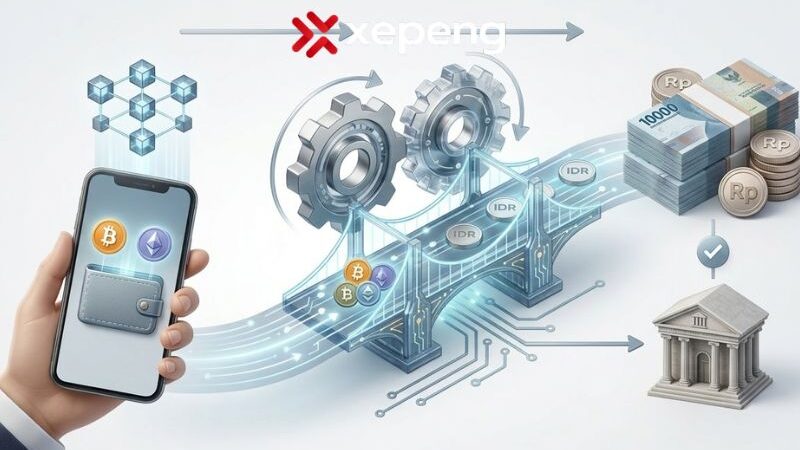
In our previous post, we established that crypto-to-IDR settlement is the only legal way for Indonesian businesses to tap into the digital asset market. But how does it actually work in real-time? Whether you are a surf shop in Uluwatu or a boutique hotel in Raja Ampat, the infrastructure behind the scenes is designed to be invisible yet incredibly robust.
Here is the step-by-step journey of a crypto payment processed nationwide.
Step 1: The Secure Payment Link
The process starts when a merchant generates a transaction. Unlike traditional credit card terminals, a crypto-ready business uses a secure gateway interface.
- Merchant Action: Enters the amount in Rupiah (IDR).
- The System: Automatically calculates the real-time conversion rate for the chosen digital asset (e.g., USDT, BTC, or ETH).
- Result: A dynamic QR code or secure transfer link is presented to the customer.
Step 2: Onshore Instant Conversion
Once the customer scans the QR code and confirms the transfer from their digital wallet, the most critical part of the process begins. To remain compliant with Bank Indonesia’s Currency Law, the crypto never actually touches the merchant’s business account. Instead:
- The digital asset is sent to a regulated liquidity provider.
- An instant “Onshore Conversion” occurs, locking in the Rupiah value at that exact second.
- This step eliminates the “Volatility Gap” the risk that the asset’s value might drop before it reaches the merchant.
Step 3: Compliance & Risk Screening
Safety is paramount. Before the funds are released, every transaction undergoes an automated compliance check.
- KYC/AML Filtering: The system ensures the transaction doesn’t originate from high-risk or blacklisted addresses.
- Transparency: Every step is recorded on the blockchain (for the digital side) and the banking ledger (for the Rupiah side), providing a 100% auditable trail for tax and accounting purposes.
Step 4: Direct IDR Settlement
This is the final destination. The converted Rupiah is sent via the national banking rails (like BI-FAST) directly to the merchant’s registered bank account.
- Settlement Time: Depending on the service level, this can be near-instant or batched daily.
- Notification: The merchant receives a confirmation via email or the Xepeng dashboard, just like a standard bank transfer or e-wallet notification.
Why “Nationwide” Matters?
The beauty of this technology is that it bypasses the physical limitations of traditional point-of-sale systems. A business in a remote part of Indonesia can accept payments from a customer in London or New York as easily as if they were standing in front of them.
By removing the friction of international currency exchange and the complexity of blockchain management, platforms like Xepeng are leveling the playing field for Indonesian SMEs in the global digital economy.
Does Your Business Need a Modern Upgrade?
The world is moving toward digital assets. Don’t let the technical jargon stop you from growing.
See the Xepeng workflow in action and start accepting global payments today.