
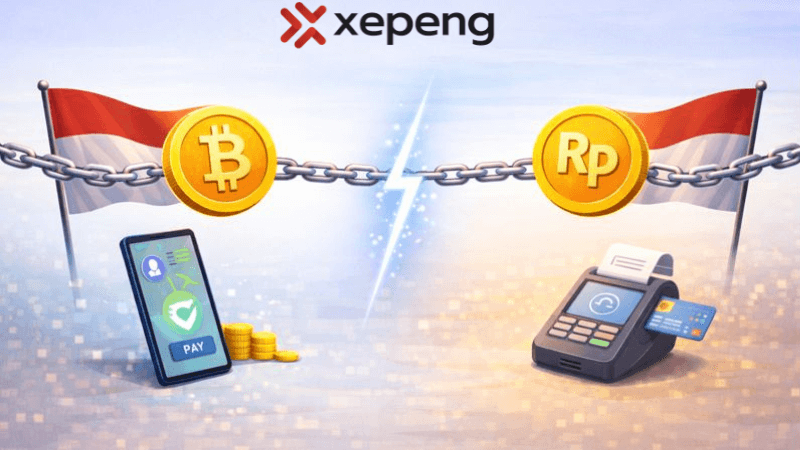
Choosing the right payment method directly affects revenue, cash flow, and operational risk. In Indonesia, most businesses rely on traditional payment gateways such as credit cards, bank transfers, and local e-wallets. At the same time, crypto payment Indonesia is emerging as an alternative.
Understanding the difference helps merchants decide which option fits their business model.
Traditional payment gateways operate through multiple intermediaries. Card networks, issuing banks, acquiring banks, and processors all play a role. Each layer adds cost and processing time.
Merchants typically pay a merchant discount rate, processing fees, and sometimes cross-border charges. Settlement often takes several business days. Chargebacks can reverse payments long after a transaction is completed.
Crypto payments use a different structure. Transactions occur directly on the blockchain. Once confirmed, payments are final. Merchants receive crypto and convert it to Indonesian Rupiah through a conversion platform.
This difference affects costs.
Traditional gateways charge percentage-based fees and fixed costs. Crypto payments generally involve lower network fees and simpler settlement processes.
Settlement speed also differs.
Traditional systems often delay fund availability due to clearing and risk checks. Crypto payments can settle much faster, especially when stablecoins are used and converted to IDR promptly.
Risk management is another key factor.
Chargebacks are a major issue for merchants using credit cards. Fraud disputes can result in lost revenue and additional fees. Crypto transactions are irreversible, which removes chargeback risk.
However, crypto introduces its own considerations. Price volatility can affect revenue if merchants hold volatile assets. Most businesses address this by using stablecoins and converting to IDR quickly.
So which option is better.
Traditional payment gateways still work well for businesses focused on local consumers who prefer familiar methods. Crypto payments are more suitable for businesses serving international customers, digital services, and online platforms.
Many merchants use both systems strategically. Traditional gateways handle local payments. Crypto payments handle international transactions and high-fee scenarios.
The key is choosing the right infrastructure. Merchants should evaluate fees, settlement speed, risk exposure, and customer preferences. Payment methods should support growth, not slow it down.
Crypto payment is not a replacement for all traditional systems. It is a powerful alternative that gives Indonesian merchants more control over costs and cash flow.
FAQ
Are crypto payments cheaper than traditional gateways
For many businesses, yes. Especially for international and digital transactions.
Do crypto payments eliminate chargebacks
Yes. Blockchain transactions are final and cannot be reversed.
Can merchants use crypto and traditional payments together
Yes. Many businesses combine both to optimize cost and reach.xepeng.com helps Indonesian merchants compare, implement, and manage crypto payments alongside traditional methods. Accept crypto, convert to IDR, and optimize your payment costs.